Toasty Panetteria book series · First edition
The Toasty
Book of Bread
An Illustrated Guide to the World’s Greatest Loaves
A bread atlas for curious readers and hungry bakers.
Bread tells you what could be grown, what heat was available, how a working day was organised and what people wanted to share at the table. Follow those threads around the world, with illustrated histories and recipes that bring the journey home.
By Austin Welsh-Graham
Find the book on Amazon Explore the TL;DR
Kindle · Paperback · Hardback All Available
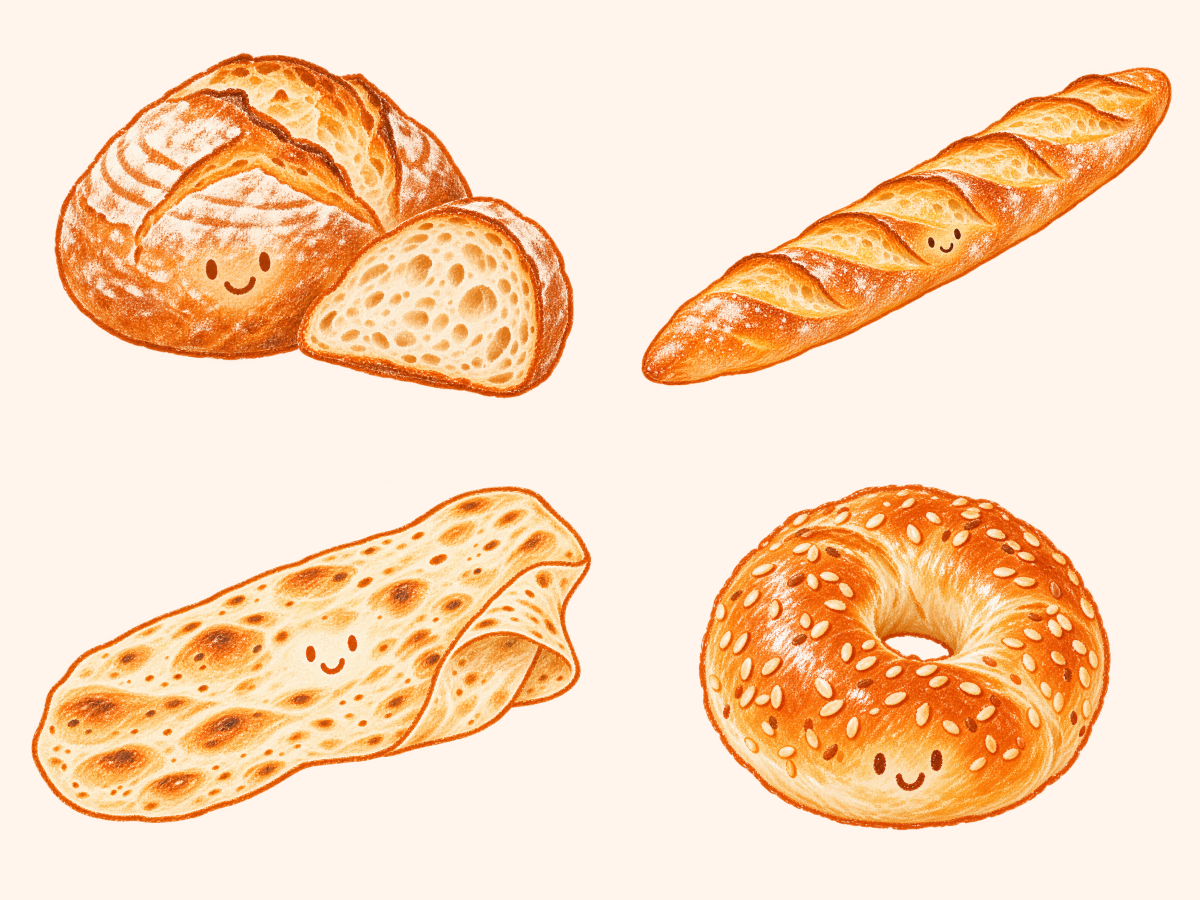
Read widely. Bake something new.
The book brings together 48 principal bread entries and 51 recipes across eight regional routes. There are familiar loaves, crisp sheets, steamed buns, pan breads and breads whose ingredients ask you to think differently about the bowl in front of you.
The histories sit alongside practical guidance on materials, fermentation and heat. A glossary, recipe finder, indexes, table of figures and full references help you follow a question further or simply choose tomorrow’s bake.
I’ve baked the recipes, shared them with friends and tried them in different meals. My hope is that something in these pages becomes a regular visitor to your own table.
The book and its companions

The full book
The complete illustrated journey, with regional histories, recipes, foundations and Connections essays.
Available on Kindle, in paperback and in hardback.
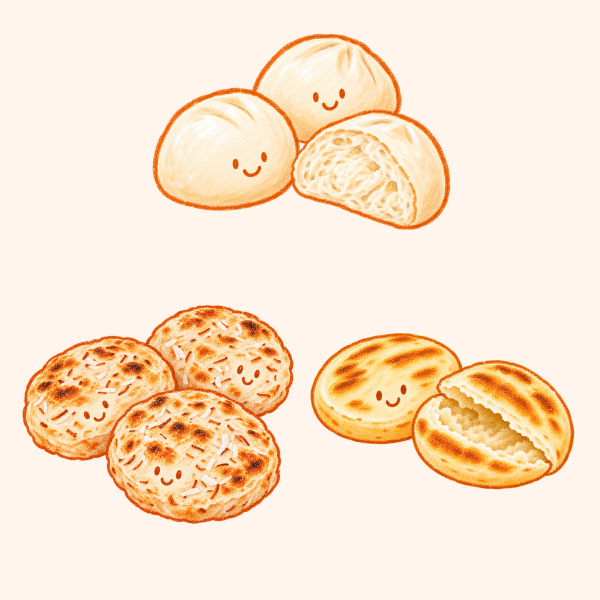
The Toasty Book of Bread: TL;DR
Pick a bread. Put the kettle on. Eight recipes, a few useful baking cues and some quick rescues when the first attempt has other ideas.
Colourful pocket guide · PDF · 1.0.4 · About 14 MB
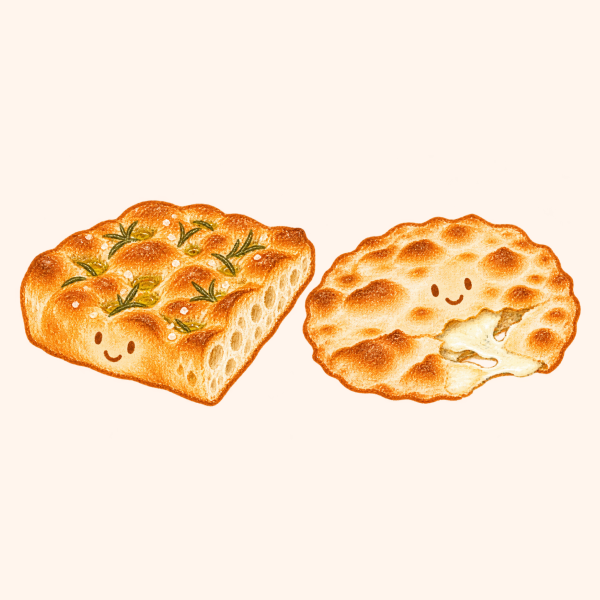
Connections
Six illustrated essays explore neighbouring traditions, flat sheets, rings, living cultures, bread made to keep and the meals bread helps gather.
Published Zenodo excerpt with cited references
From the page to the Baker’s Archive
Over the next couple of weeks, I’ll be adding recipes from the book to the Baker’s Archive a few at a time. Each entry will bring its ingredients, method, practical notes and source details with it.
An oily tray of focaccia, a coconut roti for the pan, a soft steamed bun or an arepa ready to fill. There is no need to wait for every recipe before choosing a bake.
A few connections to follow
Genoa and Recco give focaccia different interiors. Pita and arepas both make room for lunch, though one pocket is puffed by steam and the other is opened with a knife. Rye starters, teff cultures and potato bugs each give the next batch a beginning.
Those likenesses are an invitation to look more closely. The stories, ingredients and work behind the bread are where the journey gets interesting.
About the author
I’m Austin, the software developer and baker behind Toasty Panetteria and the Baker’s Archive. I like the way bread brings practical questions and bigger stories into the same kitchen. This book is the result of following that curiosity, with plenty of baking along the way.
Book details and citation
Author
Austin Welsh-Graham
Series
Toasty Panetteria book series
Edition
First edition, 2026
Imprint
Independently published
Print interior
266 pages, illustrated in colour
Paperback ISBN
979-8-1852-5111-9
Hardback ISBN
979-8-1616-3430-1
Welsh-Graham, Austin. The Toasty Book of Bread: An Illustrated Guide to the World’s Greatest Loaves. First edition. Toasty Panetteria book series. Independently published, 2026. Paperback ISBN 979-8-1852-5111-9.
For the Connections essays, cite the published excerpt. Original text and illustrations are shared under CC BY-SA 4.0. Credited third-party material retains its respective rights.
Small corrections, future bakes
Found a typo or want to tell me how a recipe went? Use the contact or contribution page and include the bread name and edition. Small corrections will be noted here as revisions are released.