
Skip to Content
Pain de campagne

Pain de campagne

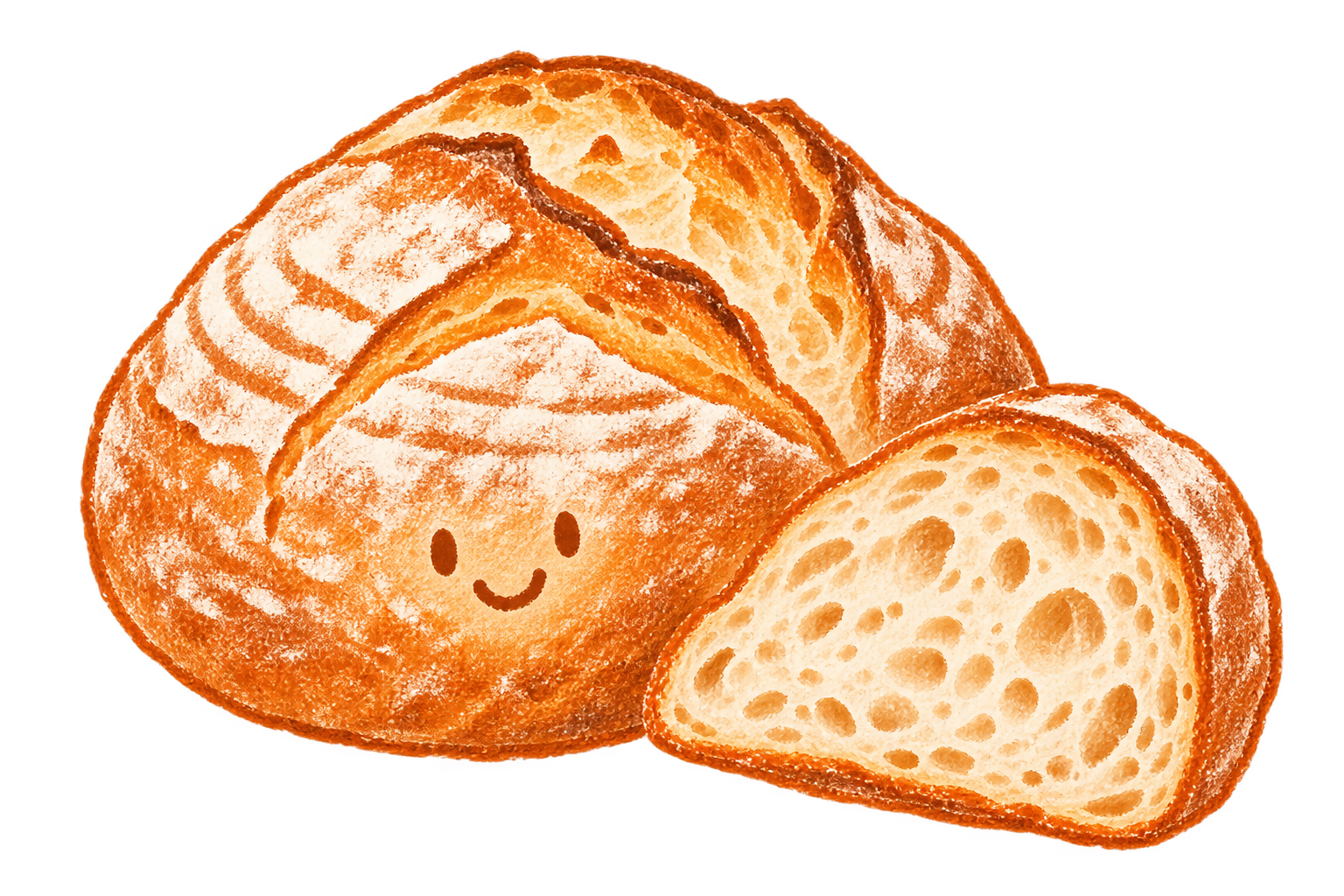
A country sourdough to slice slowly
Author:
Austin Welsh-Graham
| Source:
The Toasty Book of Bread
Categories: The Toasty Book of Bread Cooking Method Bread Form Leavening Collection Regional Route Main Material

Ingredients
Description

A baguette seems to belong to a particular hour. A country loaf invites a longer acquaintance. It can sit at the centre of several meals, acquiring another purpose each time someone cuts a slice. The heel may be toast by the time the centre has carried lunch.

A substantial country sourdough round, made on an overnight schedule and baked in a lidded bread pot. Makes 1 large round.

Recipe
Mixing and kneading
1
Use an established starter fed within the past week. Mix everything. Cover for 15 minutes.
Resting and fermentation
1
Give three sets of folds, 15 minutes apart. Cover and ferment about 12 hours at 22 °C, until nearly doubled.
Shaping and layering
1
Round gently. Rest 10 minutes. Shape snugly and place seam-up in a well-floured, cloth-lined bowl. If sluggish, leave 30-60 minutes before refrigerating. Chill 8-12 hours.
Cooking
1
Preheat the suitable lidded pot at 260 °C for 45 minutes. Turn dough onto temperature-rated parchment. Slash once and lower into the pot.
2
Cover. Reduce to 230 °C. Bake 20 minutes covered, then 20-25 uncovered, until deep brown. Cool completely.
Notes

About 22–26 hours, mostly waiting. A lined bowl or proving basket, scraper, and lidded bread pot rated to 260 °C.

Expect a wet dough

This is the stickiest round loaf in the section. A scraper, wet hands and short rests are more useful than continually adding flour. I'd recommend folds and attention to flour choice. Extra water is not a prize in itself. Choose strong bread flour for this particular formula.

Look before shaping

If the dough is still low and dense after the suggested fermentation, give it longer. If it has risen and is beginning to collapse, shape it promptly. A neglected starter and a chilly room will not behave like a recently maintained starter at 22 °C.

Cool at least two hours, or until the centre is no longer warm.